Two weeks after the AquaBioNets International Summer School on Sustainable Aquaculture, the impressions are still settling in.
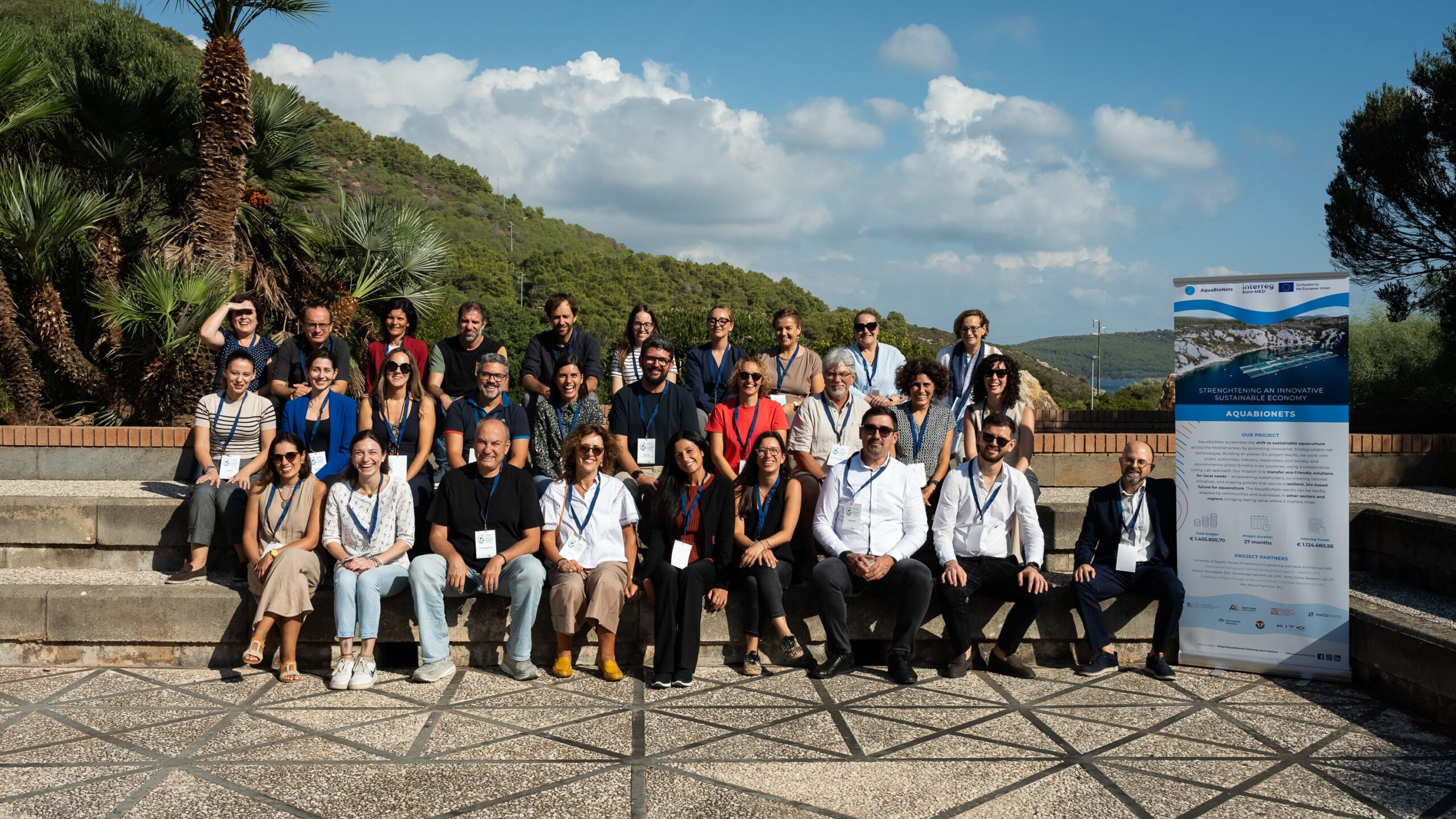
From 6 to 8 October 2026, AquaBioNets partners, invited speakers, aquaculture professionals, researchers and other stakeholders gathered at Porto Conte Ricerche in Tramariglio, near Alghero, Sardinia, for three intensive days of presentations, discussions, practical exchange and networking.
The Summer School was organised within the AquaBioNets project, co-funded by the Interreg Euro-MED Programme, with Porto Conte Ricerche as host.
Day 1 – from project results to broader aquaculture challenges
The first day brought together 11 speakers and covered a wide range of topics related to sustainable aquaculture.
The programme started from the AquaBioNets project perspective, including the project’s objectives, biodegradable materials for aquaculture applications, laboratory testing, microplastics and fish welfare. It then broadened the discussion towards conventional plastic fishing and aquaculture gear, digital innovation, testing biodegradable solutions under real aquaculture conditions, environmental impacts, climate change, carrying capacity and sustainable aquaculture practices.
The combination of project partners and invited external speakers helped place the AquaBioNets work within a wider sectoral context, connecting ongoing project activities with broader challenges and developments in aquaculture.
The day concluded with a Mini Living Lab exercise, giving participants an opportunity to experience the participatory methodology used within AquaBioNets. The exercise demonstrated how the project involves relevant stakeholders in identifying needs, discussing barriers and contributing to the process of introducing sustainable innovations into practice.
Day 1 was also kept interactive through a quiz accompanying the presentations. We are grateful to all speakers who prepared questions linked to their presentations, and to the AquaBioNets communication team for preparing and facilitating the quiz throughout the day. Both in-person and online participants joined enthusiastically and helped make the hybrid format more engaging. 😊
Day 2 – seeing aquaculture in practice
The second day took participants outside the conference room for a field visit to the offshore aquaculture facility Palma d’Oro.
Our hosts introduced us to the history and development of their business and shared practical insights into everyday aquaculture operations. Participants had the opportunity to see the offshore cages, learn more about the feeding process and hear first-hand experiences from those working directly in the sector.
The visit provided an important practical dimension to the discussions from Day 1, connecting questions of sustainability, technology and innovation with the reality of aquaculture production.
The programme continued with a visit to MuT – Museo della Tonnara in Stintino, where participants were introduced to the rich local history of tuna fishing and the strong relationship between the community, the sea and traditional fishing practices.
Day 3 – three activities in parallel
The final day was particularly dynamic, with three parallel activities taking place at the same time.
The Porto Conte Ricerche team hosted a second round of thematic presentations with eight invited speakers, who joined the Summer School remotely and contributed perspectives from different countries and research areas. Their presentations addressed topics including plastic degradation, digital innovation, circular aquaculture, fish welfare and environmental risks.
We would also like to sincerely thank all eight invited speakers for sharing their time, expertise and perspectives with the AquaBioNets community and for contributing to such a diverse and engaging final day of the Summer School.
At the same time, in-person participants had the opportunity to take part in a poster session and visit the Porto Conte Ricerche laboratories, gaining a closer look at the facilities and research activities taking place at PCR.
Meanwhile, the AquaBioNets project partners held the 3rd Technical Partner Meeting and 4th Steering Committee Meeting, focusing on the next steps in project implementation, reporting and the preparation of upcoming capacity-building activities.
The Summer School officially closed with participants coming together once again, before the final bus ride towards the airport and Alghero city centre – and the inevitable moment to say goodbye.
A strong team effort
An event of this scale would not have been possible without strong local organisation and coordination.
On behalf of the AquaBioNets partnership, we would like to thank the entire Porto Conte Ricerche team for hosting the Summer School and supporting its preparation and implementation.
A special thank you goes to Roberto Anedda, PhD, scientific coordinator of the Summer School, and Daniela Pagnozzi, PhD, who coordinated many of the organisational details and helped keep all parts of the event connected.
We are also grateful to the many other PCR colleagues who supported the organisation, logistics, hosting, technical arrangements and field activities throughout the three days.
Our thanks also go to all speakers, participants and project partners who contributed their knowledge, questions, experiences and ideas. The value of the Summer School came from this diversity of perspectives and from the willingness to exchange openly across research, industry and other stakeholder groups. ❤️
What’s next?
The Summer School may be over, but the work continues.
In the coming weeks, we will share more memories from Sardinia, including official photos and the AquaBioNets ISS aftermovie.
At the same time, the project is already moving into its next major phase. Led by MUSOL Foudnation, AquaBioNets partners are now working on the preparation of a series of capacity-building activities based on the needs and topics identified throughout the project.
The aim is to continue transforming the knowledge, discussions and stakeholder input gathered so far into practical learning activities for the project’s target groups.
So stay tuned and keep following AquaBioNets as we enter the second half of project implementation.
More updates, materials and upcoming activities will be shared through the AquaBioNets website and LinkedIn page.