New feeds, new farming practices and new bio-based materials may promise greater sustainability, but understanding their effects on fish health and welfare is essential before they can be widely adopted. This is where Porto Conte Ricerche (PCR) contributes to AquaBioNets.
Sustainability in aquaculture is not only about reducing environmental impacts. It also means ensuring that innovative solutions are safe for the fish being farmed. With almost two decades of experience in aquaculture research and innovation, PCR brings exactly this expertise to the project.
Since 2006, PCR has been supporting the development of sustainable aquaculture through research focused on fish nutrition, physiology, metabolism and welfare. Working closely with aquaculture producers, feed manufacturers and research institutions, PCR has developed extensive expertise in understanding how fish respond to changes in their environment, farming practices and nutrition.
The centre operates specialised experimental facilities, including Recirculating Aquaculture Systems (RAS), metabolic chambers and advanced analytical laboratories. These infrastructures allow researchers to conduct controlled trials on farmed species such as gilthead seabream (Sparus aurata) and European seabass (Dicentrarchus labrax), evaluating growth performance, feed utilisation, product quality and physiological responses under different farming conditions.
Over the years, PCR has participated in several research projects aimed at developing more sustainable aquaculture systems. Among these, the AGER “4F – Fine Feed for Fish” project investigated the effects of alternative protein sources, including insect meals, poultry meals and plant-based ingredients, on fish health, metabolism and product quality. Another example is the GoFree project, which focused on optimising environmentally sustainable shrimp traps made from a vegetable-derived polymer and demonstrated strong interest from end users. The knowledge generated through these initiatives is now being further capitalised within AquaBioNets.
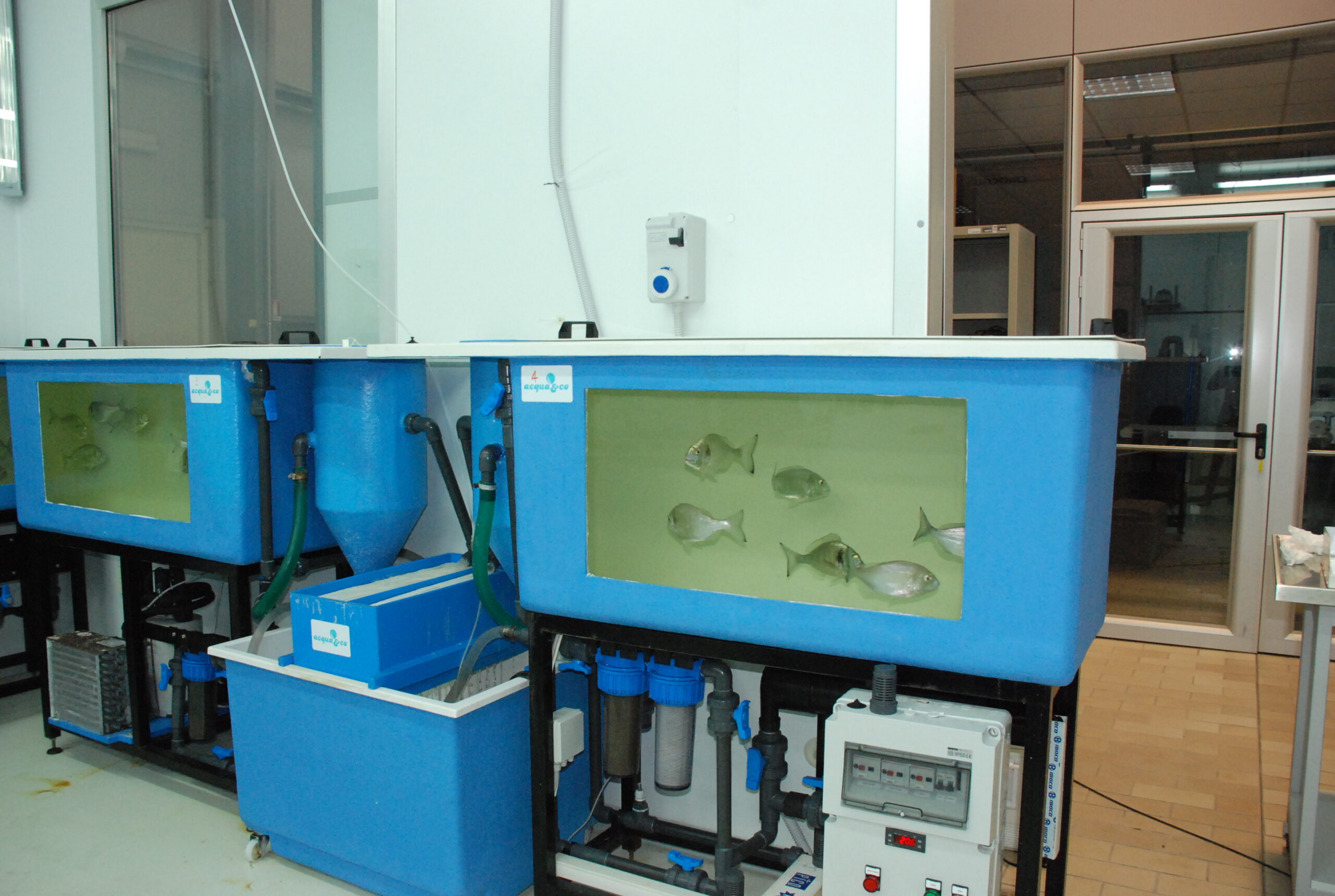
Within AquaBioNets, PCR brings this experience to a new challenge: assessing the compatibility of innovative bio-based materials for aquaculture nets designed to support more sustainable farming practices.
AquaBioNets promotes environmentally friendly solutions for the aquaculture sector, including biodegradable materials that could help reduce marine pollution, prevent ghost fishing and support the transition towards a more sustainable blue economy. While these materials offer significant environmental benefits, it is equally important to verify that they do not create unintended consequences for aquatic organisms.
For this reason, PCR leads an activity focused on evaluating the effects of selected bio-based materials on fish metabolism and welfare. Using its Recirculating Aquaculture Systems (RAS), researchers investigate how innovative materials interact with biological systems under controlled environmental conditions and compare their effects with those of conventional materials, including those associated with the release of microplastic particles into aquatic environments.
Fish may appear perfectly healthy while important physiological and metabolic changes are already taking place.
To detect these early responses, PCR applies advanced analytical approaches based on ¹H NMR metabolomics and proteomics. These technologies allow scientists to analyse thousands of biological molecules simultaneously, providing a detailed picture of how fish respond to environmental conditions and potential stressors. By examining metabolic and protein profiles, researchers can identify early indicators of stress, adaptation, immune responses and metabolic alterations, generating valuable evidence on fish welfare long before visible symptoms appear.
The integration of controlled experimentation, advanced laboratory analyses and long-standing expertise in aquaculture enables PCR to provide robust scientific evidence supporting the development of sustainable innovations.
Through AquaBioNets, PCR helps ensure that innovation is evaluated not only from an environmental perspective but also through the lens of fish welfare and biological performance. This approach bridges the gap between technological innovation and practical aquaculture applications, supporting the development of solutions that are both environmentally responsible and biologically safe.
By combining scientific excellence, advanced analytical capabilities and close collaboration with industry stakeholders, Porto Conte Ricerche continues to contribute to a more sustainable and resilient future for Mediterranean aquaculture.